
Leading Hybrid and Distributed Teams
Best For
Frontline Leaders, Managers, Mid-Level Leaders, Project Leads, Cross-Functional Leaders, and Leaders Managing Remote, Hybrid, Multi-Site, or Distributed Teams
Hybrid Leadership and Team Communication
Leading Hybrid and Distributed Teams
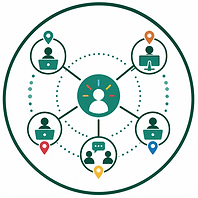
Leading Hybrid and Distributed Teams helps leaders communicate, coordinate, and build accountability across teams that do not always work in the same location, time zone, or schedule.
Hybrid and distributed work creates practical leadership challenges. Leaders may have less visibility into daily work, fewer informal conversations, uneven participation across onsite and remote employees, and more difficulty building trust, alignment, and follow-through. Without clear expectations and communication habits, employees can feel disconnected, meetings can become inefficient, and work can slow across locations.
This course gives leaders practical tools for managing communication, collaboration, performance, engagement, and accountability in hybrid, remote, multi-site, or distributed environments. Participants learn how to set clearer expectations, create consistent communication rhythms, lead more inclusive meetings, support connection across locations, and keep employees aligned to priorities and outcomes.
The course is especially useful for leaders responsible for teams working across office locations, field locations, home offices, different shifts, regions, or business units.
Business Issue This Course Helps Solve
This course helps organizations address hybrid and distributed team challenges such as:
Employees feeling disconnected from the team, leader, or organization
Communication gaps between onsite, remote, field, or multi-site employees
Uneven access to information, decisions, meetings, and development opportunities
Leaders struggling to maintain visibility without micromanaging
Meetings that fail to include remote or distributed participants effectively
Confusion about priorities, expectations, responsibilities, or follow-through
Performance issues being missed or addressed too late because work is less visible
Collaboration slowing down across functions, shifts, locations, or time zones
Remote or hybrid employees feeling excluded from informal communication and decision-making
Leaders needing stronger tools for trust, accountability, engagement, and team effectiveness across locations
Your Instructor
Who Should Attend
This course is designed for:
Frontline leaders
Supervisors and managers
Mid-level leaders
Project leads
Cross-functional leaders
Leaders managing hybrid, remote, distributed, or multi-site teams
Leaders working across locations, shifts, regions, or time zones
Leaders responsible for maintaining team connection, accountability, and performance when employees are not always together
Organizations that want more consistent leadership practices for hybrid and distributed work
Delivery Options
Leading Hybrid and Distributed Teams can be customized and delivered as:
In-person leadership development course
Virtual instructor-led leadership training
Hybrid leadership workshop
Remote team management training
Multi-site leadership training
Manager training for distributed teams
Project lead or cross-functional leader development session
Module within a broader leadership development program
Customized course using the organization’s hybrid work model, communication norms, meeting practices, technology platforms, and leadership expectations
Recommended Course Duration
3.5 Hours
Participant Outcomes
As a result of this course, participants will be better able to:
Understand the leadership challenges created by hybrid, remote, multi-site, and distributed work
Set clearer expectations for communication, availability, responsiveness, and work outcomes
Create communication rhythms that keep employees aligned without creating unnecessary meetings
Use meetings more intentionally to support inclusion, collaboration, decision-making, and follow-through
Build trust with employees who are not always physically present
Maintain accountability by focusing on expectations, outcomes, progress, and follow-up
Reduce proximity bias and create more equitable participation across onsite and remote employees
Support employee engagement, connection, and belonging across locations
Identify when employees may be isolated, unclear, overwhelmed, or under-supported
Strengthen collaboration across teams, departments, shifts, regions, and time zones
Provide feedback, coaching, and recognition consistently in hybrid and distributed environments
Adapt leadership communication based on the needs of the team, work, and situation
Keep distributed employees connected to priorities, team goals, and business results
Assessment / Other Details
This course can include practical tools, discussion, scenarios, team communication planning, meeting practice, and leadership application activities.
Participants may work through examples involving hybrid meetings, remote employee engagement, multi-site coordination, performance follow-up, communication breakdowns, and uneven participation across locations. The course can also incorporate the organization’s current technology platforms, communication expectations, meeting norms, and hybrid work policies.
This course works well as a stand-alone management training course or as part of a broader leadership development program focused on communication skills, team effectiveness, performance management, employee engagement, accountability, and change leadership.
Next Steps
Hybrid and distributed teams need clear communication, intentional connection, and consistent accountability.
Contact Talent Authority to discuss how Leading Hybrid and Distributed Teams can help your leaders strengthen communication, collaboration, engagement, and performance across locations.
This course also pairs well with:
Leadership Communication and Feedback Skills
Leading Productive Meetings: Communication, Collaboration, and Follow-Through
Coaching Skills for Leaders
Team Effectiveness for Leaders: Building Stronger, More Collaborative Teams
Performance Management for Leaders: Accountability, Goals, and Follow-Through
Leadership’s Role in Employee Engagement and Retention